
Cheers to a whopping number of 20 holidays and 13 long weekends in the Philippines! Filipinos have all reasons to rejoice this 2015 as well! Feeling the vacation vibe? Plan your getaways now!

7 Valid IDs in the Philippines You Should Have Right Now as an Adult
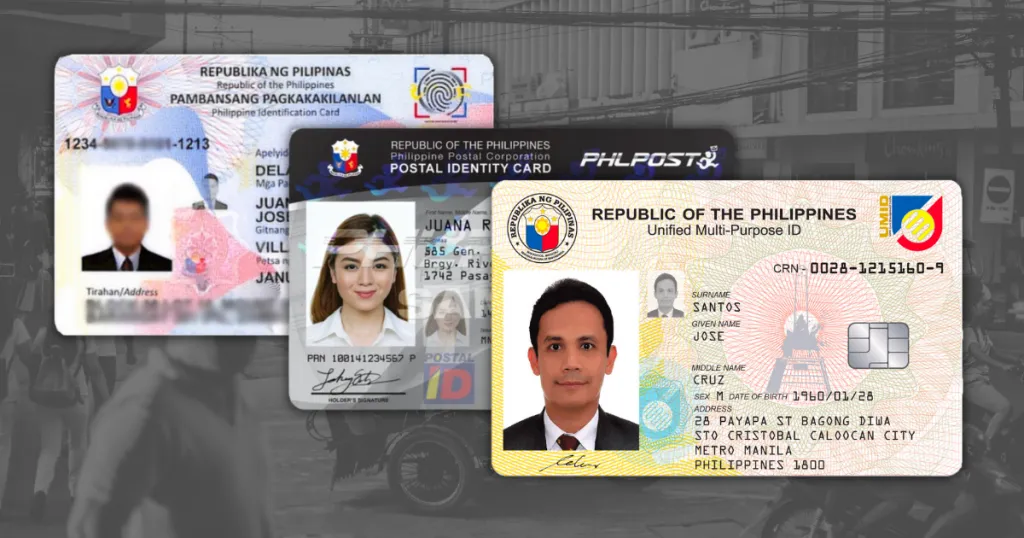
Having a valid ID in the Philippines is a must for every adult. Whether it’s opening a bank account, applying for a job, travelling, or doing government transactions, you’ll need at least one ID—and sometimes two. If you’re looking to get your first government-issued ID, or want to add another to your collection, here’s a list of the IDs every adult in the Philippines should have.
All this considered, getting an ID for yourself should be an obvious priority. So, if you’re looking to get your first government-issued ID, or if you already have one but want to add another, we’ve rounded up each valid ID in the Philippines that you must have as an adult.
Easy choices for your first valid ID in the Philippines
Image credit: John Kevin via Canva Pro
Isn’t it bewildering that applying for a valid ID in the Philippines requires you to show another? We know the struggle. The scenario reminds us of the challenge of applying for a first job, but needing work experience to back our applications.
Getting a valid ID in the Philippines is indeed demanding, but we understand, and we’re here to help. First things first: We recommend that you get an original copy of your PSA-issued birth certificate. It’s the main document requirement you have to submit for your first ID. Fortunately, you can order a birth certificate online.
Once you have secured your birth certificate, you can proceed to apply for the following valid IDs in the Philippines.
1. Postal ID
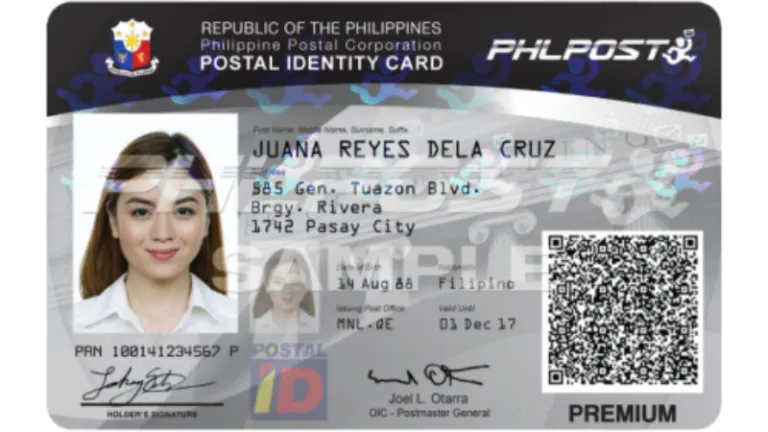
Image credit: Philippine Postal Corporation Official Website
The Postal ID is one of the easiest government-issued IDs to obtain. Any Filipino, regardless of current residency, is eligible to get one. Even foreign nationals can get this ID, too, granted that they have proof of Philippine residency and have been in the country for at least six months.
Infused with improved physical and biometrics-based security measures, the Postal ID is a great starter ID that is both secure and accessible. It’s the ID to get if you don’t have one yet. The best part of owning this ID? You can apply for other valid IDs with ease in the future.
How to apply
Download and fill up the application form. Prepare the necessary requirements and head over to your nearest ID capture station. The officers in charge will get your biometrics there as well. Upon completion, your ID will be delivered to your mailing address.
Requirements
Bring the original copy and photocopy of the following documents.
Two copies of fully accomplished Postal ID application form
Any of the following proof of address:
Barangay Certificate of Residency issued within three (3) months prior to application
Certified True Copy of Lease
Bank or credit card statement
Certified True Copy of Titles issued by the Land Registration Authority (LRA)
Utility bill under your name (electric, cable, landline, internet, telephone, water)
School billing statement
Certified True Copy of Real Estate Tax Receipt
Any of the following proof of identity:
Birth certificate issued by NSO or local civil registry
GSIS or SSS UMID card
Valid driver’s license
Valid passport
If you’re a married woman using your husband’s surname, you must bring your marriage certificate as an additional document to validate this. Should you lack any of the proof of identity above, don’t worry; the Philippine Postal Corporation (PHLPost) still accepts other documents as proof. You may check other valid documents here.
Cost and estimated turnaround time: A fixed fee of ₱504 must be paid. Your Postal ID will be delivered in approximately 15-30 working days, depending on your location.
Validity: Postal IDs are valid for three years for Filipinos and for foreign residents with a Special Retiree’s Resident Visa (SRRV). Without SRRV, foreign residents can still apply for a one-year validity.
Also read: Philippine Postal ID: Why You Should Get One & How to Apply
2. Philippine passport
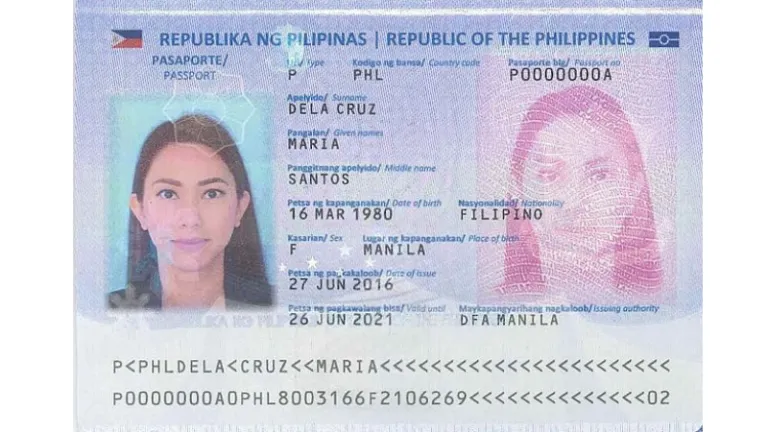
Image credit: Department of Foreign Affairs
A passport is widely accepted as one of, if not the most, powerful legal document in terms of validating identification. Nothing else can better prove your citizenship than your own passport. Of course, the passport is also an essential ID to have when travelling abroad.
How to apply
Secure an appointment with the Department of Foreign Affairs (DFA) through its online portal. Prepare the necessary requirements. Be at your respective DFA office no less than 30 minutes earlier than your selected time and date of appointment.
Requirements
Fully accomplished Philippine passport application form
Original and photocopy of birth certificate issued by NSO or local civil registry
Married females’ original and photocopy of PSA-issued marriage contract
Original and photocopy of one valid ID. See the list of acceptable cards here.
Cost and estimated turnaround time: Regular processing costs ₱950 and takes about 12 working days. To have the process expedited within six days, you will have to pay ₱1,200.
Validity: A Philippine passport is valid for 10 years for adults (18 years old and above). For minors, it’s good for five years.
Also read: Did You Know You Can Apply for Your Pet’s Passport in the Philippines?
3. Unified Multi-Purpose Card (UMID)
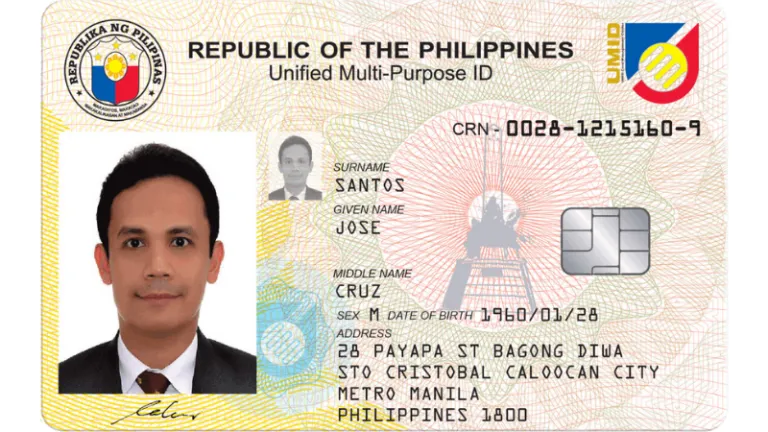
Image credit: Moonrivers
The Unified Multi-Purpose Card, more commonly known as UMID, is a four-in-one government-issued ID that allows you to transact in government agencies, particularly with the Social Security System (SSS), Government Service Insurance System (GSIS), Pag-IBIG, and Philippine Health Insurance Corporation (PhilHealth). With this, it’s a valid ID in the Philippines perfect for employees of government agencies or private institutions. Aside from being an ID, the UMID is also an ATM card that allows you to withdraw GSIS or SSS benefits and loans. Cool!
How to apply via SSS
Download and fill up the UMID application form from SSS. Schedule an appointment via the SSS members’ portal. Walk-in applicants are also accepted, but you have to follow their number coding system of scheduling for walk-in clients. Proceed to your selected SSS branch. You’ll also record your biometrics there. When your ID is ready for pick-up, you’ll receive a notification text message.
SSS requirements
Fully accomplished UMID application form from SSS
One primary valid ID (e.g. Postal ID, driver’s license, passport). Alternatively, you can submit two secondary IDs. You can check the complete list in the application form.
Cost and estimated turnaround time: Getting a UMID is free of charge. The average turnaround time after your application is about 30 working days.
How to apply via GSIS
The application for UMID via GSIS is quite similar to the SSS process. Simply accomplish the UMID Application form from GSIS and proceed to the GSIS branch near you.
Validity: UMID has no expiration date!
Other primary valid IDs in the Philippines
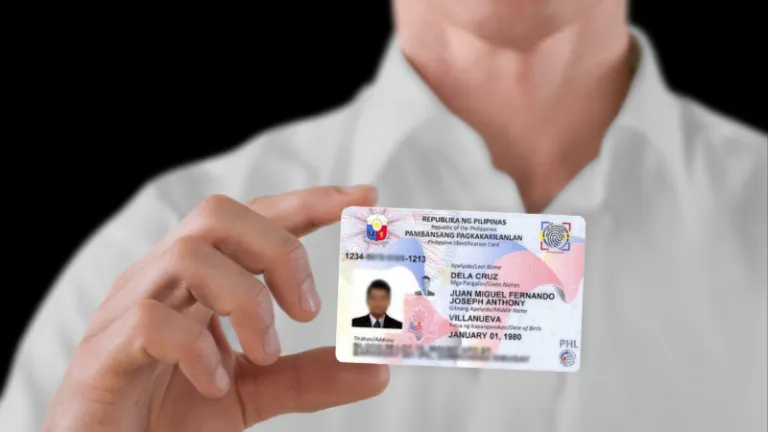
Don’t settle for the first three IDs! You can (and for some, you must!) still get these valid IDs easily, once you’ve secured the others.
4. PhilID or National ID

Image credit: Philippine Identification System Official Website
The PhilID, or Philippine National ID, now allows every citizen to have a single, unified ID. While it’s a powerful identification tool, processing can take some time—officially, it’s about six months, though some applicants have received theirs sooner. You can apply at PSA offices or at select PSA malls and government service kiosks.
However, it’s quite a reach to suggest the national ID as a go-to valid ID in the Philippines at the moment. There have been many complaints lately from applicants with regards to its turnaround time. According to PSA, a period of six months is the estimated processing time before release. Unfortunately, some have reported that they’ve been waiting for more than that, and they still haven’t received their national ID.
That said, we have to extend our understanding, given the limitations brought about by the pandemic. Furthermore, the PSA is working around the clock to expedite the application process. You may have found some PSA stalls in malls that accept applications for the national ID.
For the step-by-step process of application, read this.
5. Driver’s license
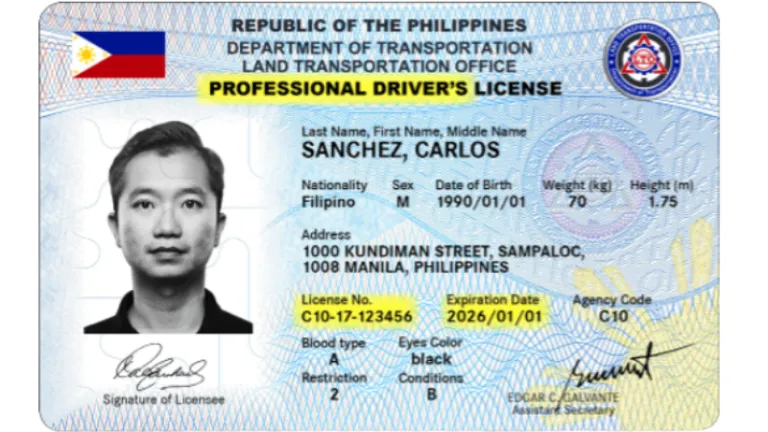
Image credit: LTMS Online Portal
Another powerful identification card to have in your pocket, a driver’s license ID is a must if you wish to take the wheels and drive in the Philippines. The requirements are similar to the other government-issued IDs, except for two additional necessities: a medical certificate signifying you are physically fit to drive, and practical proof that you actually know how to drive. Please, do not get one if you don’t know how to!
6. Professional Identification Card (PRC ID)
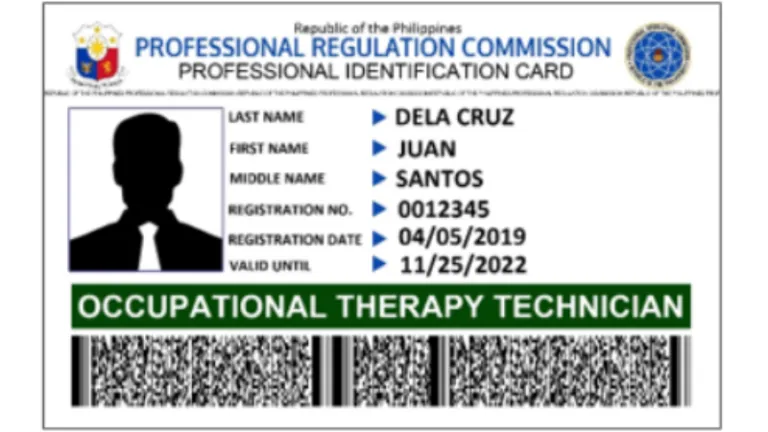
Image credit: Professional Regulation Commission Official Website
Licensed professionals, such as engineers, doctors, and accountants, among many others, must get a PRC ID in order to practice their profession. We’re just putting it out here, since passers of the professional licensure examination surely know about the PRC ID already. (We who aren’t licensed professionals have no business in getting one!)
7. Senior citizen ID
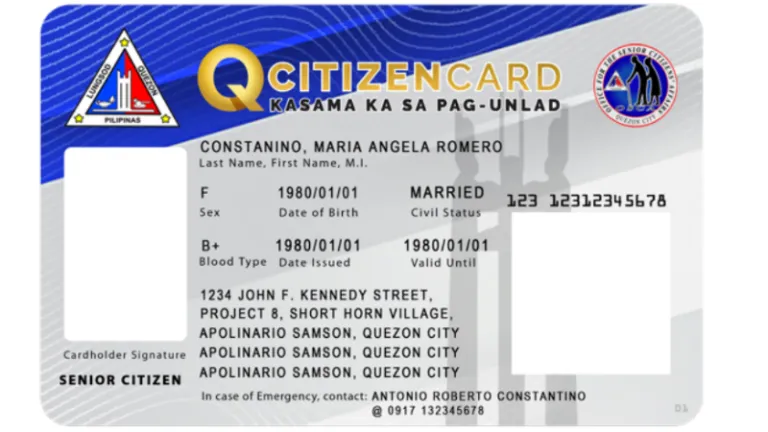
Image credit: Quezon City Government Official Website
For our dearly beloved nanays and tatays, getting a senior citizen ID offers lots of benefits. Aside from being considered a valid ID in the Philippines in most transactions, it allows our elderly to reap some hefty discounts on stores. In some cities, seniors are allowed to watch free movies in cinemas, too!
Valid IDs for Philippine passport applications
If you’re applying for a Philippine passport, all IDs must be readable, untampered, and consistent with your supporting documents. First-time applicants should bring the original and a photocopy of one valid ID along with one supporting document. For details, visit the DFA official website.
Requirements:
SSS ID
UMID
LTO Driver’s License
Alternative: Student permit in card form
PRC ID
PhilID
OWWA/iDOLE card
Voter’s ID
Alternative: Voter’s Certificate issued by COMELEC Main Office, Intramuros
PNP Firearms License
Airman License
Issued August 2016 onwards
School ID
Only for student applicants
If school ID is not available, the applicant may present a Certificate of Enrollment (with a photo of the minor and a dry seal of the school).
Postal ID
Senior Citizen ID
Seafarer’s Record Book
Alternative: Seafarer’s Identity Document
If you are applying for a passport for the first time, remember to bring both original copies and photocopies of one valid ID and one supporting document. For more information, visit the DFA official website.
These are the most important government-issued IDs you should have as an adult in the Philippines. There are other IDs available, but these seven cover most personal, professional, and travel needs. Go ahead, get yours, and keep them handy—you never know when you might need them!
Featured image credit: Aaftab Sheik via Canva Pro
Published at
About Author
Martin Joseph Raymundo
MJ’s life is a parade of dualities and ironies — an introvert who loves the outside, a paranoid risk-taker, an eccentric dude with a perfect wife, and a writer with the most terrible handwriting. He loves driving his good ol’ sedan, arms out with his windows down, zigzagging across the mountains of Aurora and Rizal while listening to the tune of John Mayer’s Rosie. A father of two (a daughter in her terrible twos and a corgi); There is nothing more important to him than family. His dream travel — running and rolling on the Swiss Alps like Heidi.
Subscribe our Newsletter
Get our weekly tips and travel news!
Recommended Articles
13 Long Weekends in the Philippines in 2015 9 Long Weekends in the Philippines in 2016 It’s definitely more fun in the Philippines in 2016 as there will be 9 long weekends with 4 days leave! Plan your getaways with our cheatsheet & calendar.
The Philippine Bucket List: 20 Challenges Every Filipino Traveller Must Complete Call yourself a true blue Filipino traveller if you’ve completed this Philippine Bucket List.
10 Countries Filipinos Probably Didn’t Know They Can Travel To Without Visa Filipinos rejoice! Your Philippine passport can take you to many countries you probably haven’t imagined travelling to without a visa.
8 Tricks to Successfully Grab Cheap Promo Flights in the Philippines PISO fare! Ooops, too late, all seats are sold out! Here’s what you need to do next time.
Latest Articles
BTS’ Agency BIGHIT MUSIC Opens Global Audition: Can Filipinos Apply? Filipinos can audition
Philippines Holidays 2027: Complete List And Long Weekends 2027 holiday dates
US To Test New System That Could Help Reduce Flight Delays New flight delay system
National Cinema Day 2026: ₱100 Movie Tickets On 12 September Watch movies for ₱100
Hot Wheels Designer Brendon Vetuskey Meets Filipino Collectors at Kingsford Hotel Manila Hot Wheels collector gathering